
 Scite
Scite Scite has the strongest current score signal; check the fit rows before treating that as universal.
Try Scite freeThere is no universal winner. Use the score spread, price signals, and latest product changes below before choosing.
Scite Scite has the strongest current score signal; check the fit rows before treating that as universal. Budget or free tier 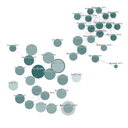 Connected Papers $0-$3/month researchers entering unfamiliar fields Connected Papers Visual academic paper graph that maps the conceptual neighborhood around a seed paper using Semantic Scholar's... Connected Papers 7/10 Scite 7.8/10 Scite
 Scite has the strongest current score signal; check the fit rows before treating that as universal.
Try Scite free Connected Papers $0-$3/month
Review Connected Papers Connected Papers Visual academic paper graph that maps the conceptual neighborhood around a seed paper using Semantic Scholar's...
Review Connected Papers Connected Papers Visual academic paper graph that maps the conceptual neighborhood around a seed paper using Semantic Scholar's...
Review Connected Papers Scite Smart Citations classify every academic reference as Supporting, Contrasting, or Mentioning across 1.2B+...
Review SciteThere is no universal winner. Use the score spread, price signals, and latest product changes below before choosing.
Open Scite reviewNo recent news update is attached to these tools yet.
Canonical facts
Volatile details are generated from each tool page so model names, context windows, pricing, and capability rows update site-wide from one source.
Connected PapersScite| Fact | Connected Papers | Scite |
|---|---|---|
| Flagship / model | Connected Papers | Scite |
| Best paid tier / price | $0-$3/month | $0-$20/month |
| Best for | Connected Papers is best for researchers who want a visual map of papers related to a seed work, including prior and derivative work exploration during literature review. | Researchers who need to see whether papers are supported, contrasted, or merely mentioned by later literature before trusting a citation trail. |
Connected Papers and Scite are visualization and citation analysis tools for academic research as of April 2026. Connected Papers generates graph-based maps of related papers from a seed paper; Scite classifies citations as supporting, contrasting, or mentioning across 1.3 billion citations.
Scite suits citation verification and evidence synthesis; Connected Papers fits visual exploration of paper networks. Choice depends on whether you prioritize citation context or similarity graphs.
| Connected Papers | Scite | |
|---|---|---|
| Flagship | Visual graph explorer (no LLM backend) | Smart Citations 2.0 with Assistant |
| Price | Free (30 graphs/month); Pro $3/month (unlimited) | Free (basic); Standard $20/month; Premium $40/month |
| Context Window/Output Specs | Unlimited graph size; 200 papers max per view | 1.3B citations; AI summaries up to 10k words |
| Best For | Discovering similar papers visually | Analyzing citation context and reliability |
Connected Papers emphasizes visual discovery through similarity graphs built from paper overlap, making it faster for initial exploration but limited to network views without citation details. Scite provides granular citation statements with AI-driven classification and querying, better for validating claims but slower for broad searches due to its database focus. Pricing reflects this: Connected Papers Pro at $3/month for unlimited use versus Scite Standard at $20/month for core citation tools.
Researchers scanning literature for related works benefit from its graph interface and low cost. It works well for grant writing or thesis planning where visual overviews speed up navigation.
Authors checking citation context or conducting meta-analyses gain from its classification and AI summaries. Teams in evidence-based fields like medicine or policy use its depth for reliability assessments.
Both tools complement each other in research pipelines: use Connected Papers to map a field, then Scite to verify key citations. Scite edges out for precision tasks given its citation scale; Connected Papers wins on accessibility for discovery.
Which is cheaper?
Connected Papers Pro at $3/month undercuts Scite Standard ($20/month), though Scite’s free tier covers basic searches.
Which has better output quality?
Scite delivers higher precision for citation analysis via classified statements; Connected Papers excels in visual clarity for paper relationships.
Can I use both?
Yes, export graphs from Connected Papers to seed Scite searches for combined discovery and validation.
Every tool page is re-verified on a recurring cycle, and corrections land faster when readers flag them directly. If you spot a stale fact, a missing capability, or have used Connected Papers vs Scite and want to share what worked or didn't, the editorial desk reviews every message sent through this form.
Email editorial@aipedia.wiki