
 nanochat
 nanochat has the strongest current score signal; check the fit rows before treating that as universal.
Get nanochatThere is no universal winner. Use the score spread, price signals, and latest product changes below before choosing.
nanochat nanochat has the strongest current score signal; check the fit rows before treating that as universal. Budget or free tier nanochat Free (MIT open-source) researchers entering unfamiliar fields 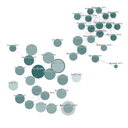 Connected Papers Visual academic paper graph that maps the conceptual neighborhood around a seed paper using Semantic Scholar's... Connected Papers 7/10 nanochat 8/10 nanochat
 nanochat has the strongest current score signal; check the fit rows before treating that as universal.
Get nanochat nanochat Free (MIT open-source)
Review nanochat Connected Papers Visual academic paper graph that maps the conceptual neighborhood around a seed paper using Semantic Scholar's...
Review Connected Papers Connected Papers Visual academic paper graph that maps the conceptual neighborhood around a seed paper using Semantic Scholar's...
Review Connected Papers nanochat Andrej Karpathy's minimal, readable LLM training framework. Learn the full pipeline from tokenization to RLHF...
Review nanochatThere is no universal winner. Use the score spread, price signals, and latest product changes below before choosing.
Open nanochat reviewNo recent news update is attached to these tools yet.
Canonical facts
Volatile details are generated from each tool page so model names, context windows, pricing, and capability rows update site-wide from one source.
Connected Papersnanochat| Fact | Connected Papers | nanochat |
|---|---|---|
| Flagship / model | Connected Papers | nanochat |
| Best paid tier / price | $0-$3/month | Free (MIT open-source) |
| Best for | Connected Papers is best for researchers who want a visual map of papers related to a seed work, including prior and derivative work exploration during literature review. | Engineers and students who want to understand the full LLM training pipeline from readable source code rather than a production training platform. |
Connected Papers and nanochat both help people understand research, but they solve very different jobs. Connected Papers is a literature-discovery product: give it a seed paper and it maps related work, prior work, and derivative work. nanochat is Andrej Karpathy’s open-source LLM training reference: a readable codebase for learning how tokenization, pretraining, supervised tuning, RLHF, evaluation, inference, and a minimal chat UI fit together.
That means this is not a normal “which research assistant is better?” comparison. Pick Connected Papers when the problem is finding the right papers. Pick nanochat when the problem is understanding how language models are trained.
Choose Connected Papers for literature review scoping, citation-neighborhood mapping, and quickly finding foundational or adjacent papers from one known seed. Choose nanochat if you are an engineer, student, or educator trying to learn the full LLM training pipeline from inspectable Python code. Connected Papers is a usable research discovery app. nanochat is a learning and experimentation repo, not a hosted research assistant.
| Connected Papers | nanochat | |
|---|---|---|
| Primary job | Visual paper discovery from a seed paper | End-to-end LLM training education |
| Output | Similarity graph, prior works, derivative works | Source code, scripts, toy models, chat demo |
| Price | Free tier; Academic plan around $3/month billed annually | Free MIT open source; compute is the real cost |
| Best For | Literature review scoping and related-work mapping | ML education, small experiments, code reading |
| Avoid If | You need synthesis, extraction, or Q&A across papers | You need a production chatbot or research app |
The most important difference is product shape. Connected Papers is a hosted application for people doing literature review. It assumes you already have at least one relevant paper and want to map the surrounding neighborhood. The value comes from visual structure: clusters, influence, prior work, and derivative work that may not surface through keyword search alone.
nanochat is not trying to help you find papers. It is a reference implementation for building and studying small language-model systems. The value comes from readability and completeness: you can trace the path from tokenizer to training loop to alignment step to inference without jumping across a production-scale framework. That is powerful for learning, but it is the wrong tool if your deadline is “find me the best papers on this topic by Friday.”
Pricing also works differently. Connected Papers has a normal SaaS-like free and paid graph workflow. nanochat is free open source, but meaningful training experiments still cost compute, setup time, and engineering attention. The sticker price is lower; the operational effort is higher.
Choose Connected Papers if you are entering an unfamiliar research area, preparing a related-work section, checking whether a paper sits in the right conceptual neighborhood, or building a reading list from one trusted seed. It is especially useful for researchers who think visually and want a quick map before deeper extraction or synthesis.
Choose nanochat if your goal is educational or technical: learning LLM internals, teaching a model-training course, running small ablations, or comparing the clean reference code against heavier training stacks. It is best for engineers and students who want to understand systems, not for general researchers who want a polished app.
Connected Papers is the practical pick for literature discovery. nanochat is the practical pick for learning how LLM training works. They can coexist in a technical research workflow, but they are not substitutes: one maps papers, the other teaches model-building.
Which is cheaper? Connected Papers has a free tier and a low-cost Academic plan. nanochat is free open source, but meaningful experiments may require paid GPU time. Treat nanochat’s real cost as compute plus learning time, not subscription price.
Which has better output quality? They produce different outputs. Connected Papers is judged by whether its graph surfaces useful related papers. nanochat is judged by whether its code clearly teaches the LLM pipeline and supports small experiments.
Can I use both? Yes, but usually for different phases. A researcher might use Connected Papers to map the literature around LLM training, then use nanochat to understand and modify a training pipeline.
Every tool page is re-verified on a recurring cycle, and corrections land faster when readers flag them directly. If you spot a stale fact, a missing capability, or have used Connected Papers vs nanochat and want to share what worked or didn't, the editorial desk reviews every message sent through this form.
Email editorial@aipedia.wiki